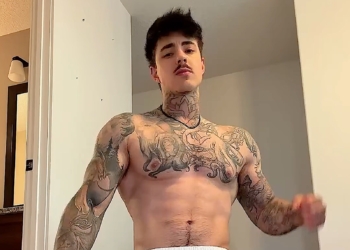



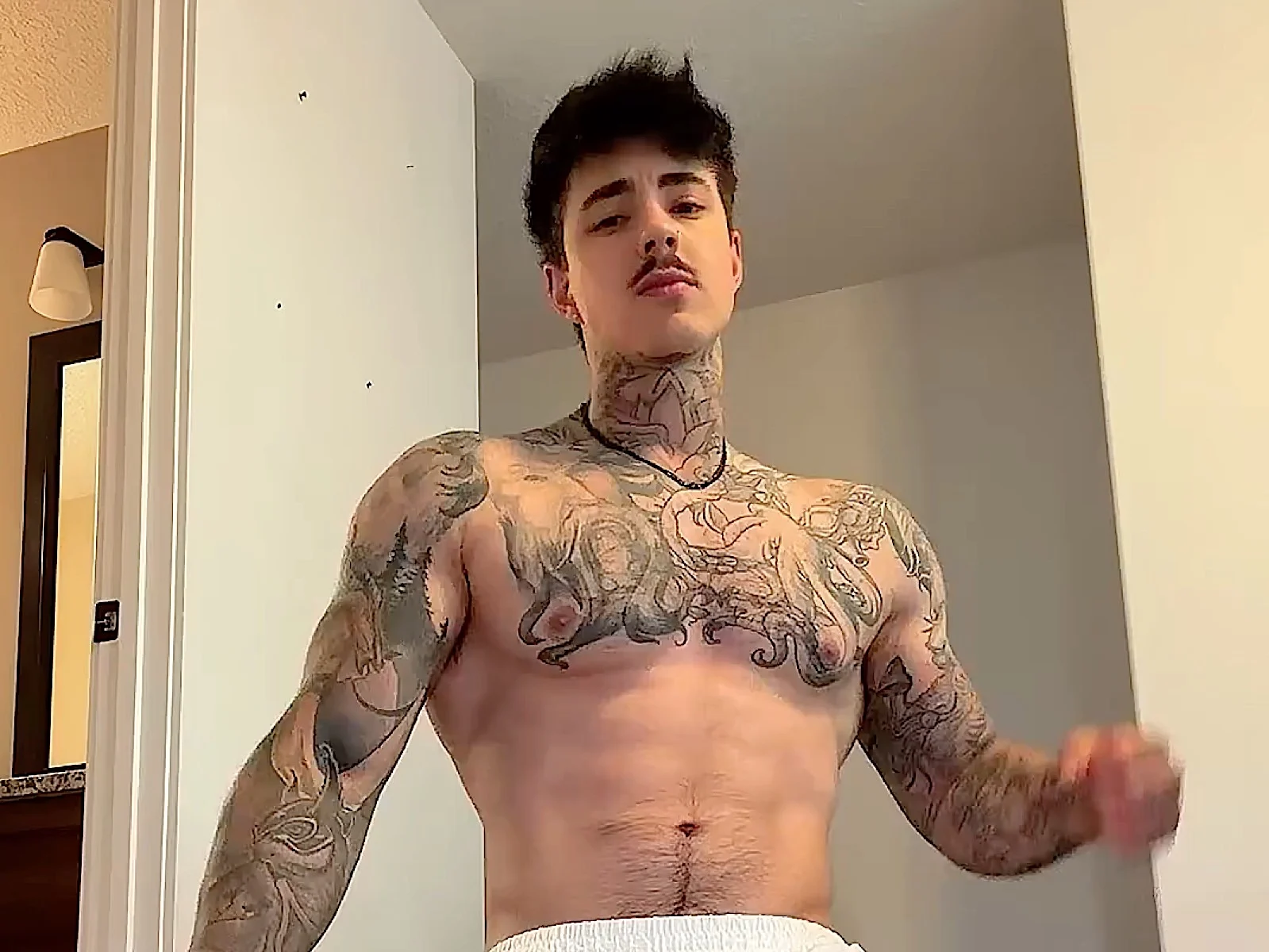
Jake Andrich built an empire on gay desire. Then he opened his mouth.
The ban hammer dropped fast. TikTok booted Andrich—known to 14 million followers as @jakipz—after a livestream clip went viral. A viewer asked whether he supports LGBTQ+ people. His answer? “Not in particular.” Then he doubled down, insisting he doesn’t believe his own community of followers consists of LGBTQ+ people.
That’s the sound of a business model cracking.
The Straight Guy Grift
Andrich isn’t just any creator. For the longest time, many believed he was “a certain type of OnlyFans lad: Straight, with a predominantly gay fanbase,” a niche regarded slightly differently from traditional gay-for-pay content. His page has racked up over 1.5 million likes and pulls in huge monthly numbers through solo content—quite a feat. He occupies a peculiar liminal space: simultaneously an object of gay fantasy and a detached businessman harvesting that fantasy for profit.
The backlash arrived within hours. Fellow OnlyFans creator Timothy Champagne took to TikTok to call Andrich out, pointing to the substantial gay following evident in the comments beneath his posts. The platform moved even faster. Andrich’s account—home to 14 million followers—vanished into the digital ether.
He didn’t stay silent. “Obviously I’m not fucking homophobic, that’s the dumbest shit ever,” Andrich raged in a follow-up video. “Have you seen what I’ve done the last decade being the number one male er*tica personality? If you truly think that, you have one brain cell.”
The defense hinged on context. Andrich claimed the clip had been “edited and chopped up to death,” insisting his actual position centers on individual merit rather than group affiliation. “I explained that I personally don’t care what religion, ethnicity, gender or sexuality someone is,” he posted on X. “I don’t default support a person based on a group they belong to, rather I support them on the individual they are.”
But the market doesn’t trade in nuance.
When the Product is Proximity
This is where the machinery of digital sex work reveals its gears. Andrich represents a specific 2026 phenomenon: “literally hundreds of straight lads deliberately situating themselves in queer spaces to make HUGE money.” It’s a calculation turbocharged by TikTok’s algorithm and the intimacy of parasocial relationships. The product isn’t just his body—it’s the illusion of acceptance, the fantasy that the straight guy on screen sees you, desires your desire, respects your community.
“Not in particular” shatters that illusion.
The economics are brutal and transparent. Andrich markets “the sale of his content to the public, in its great majority gay.” These aren’t incidental viewers; they’re the infrastructure of his wealth. When he claimed he “doesn’t believe that his community of followers consists of LGBTQ+ people,” he wasn’t just being clueless. He was exposing the transactional nature of his presence in these spaces.
The Cost of Disclosure
This isn’t about moral purity. Plenty of straight creators navigate queer adult industries with professional distance and mutual respect. The issue is the mismatch between the marketing—thirst traps dripping with implied camaraderie—and the reality of a creator who views his audience as demographic abstraction rather than community.
Andrich’s protestations about judging individuals ring hollow when your business requires collective gay dollars. You cannot harvest a community’s erotic capital while publicly withholding basic solidarity. The “Alphabet Mafia,” as one social media commenter dismissively called LGBTQ+ critics, pays the bills. When they withdraw their support, the platform follows.
The ban stings because it threatens the fantasy of consequence-free commerce. For years, Andrich and his ilk have operated in a protective bubble: too profitable to cancel, too desirable to ignore. TikTok’s decision suggests that bubble has limits. Even the most successful creators must contend with the communities they exploit.
Andrich will survive. He’ll migrate to other platforms, sell directly to subscribers, perhaps rebrand as a free speech martyr. But the template is cracked. The next straight creator who considers dipping into queer spaces for profit might think twice before answering questions about LGBTQ+ support. The correct answer, it turns out, isn’t “not in particular.” It’s “thank you for my career.”